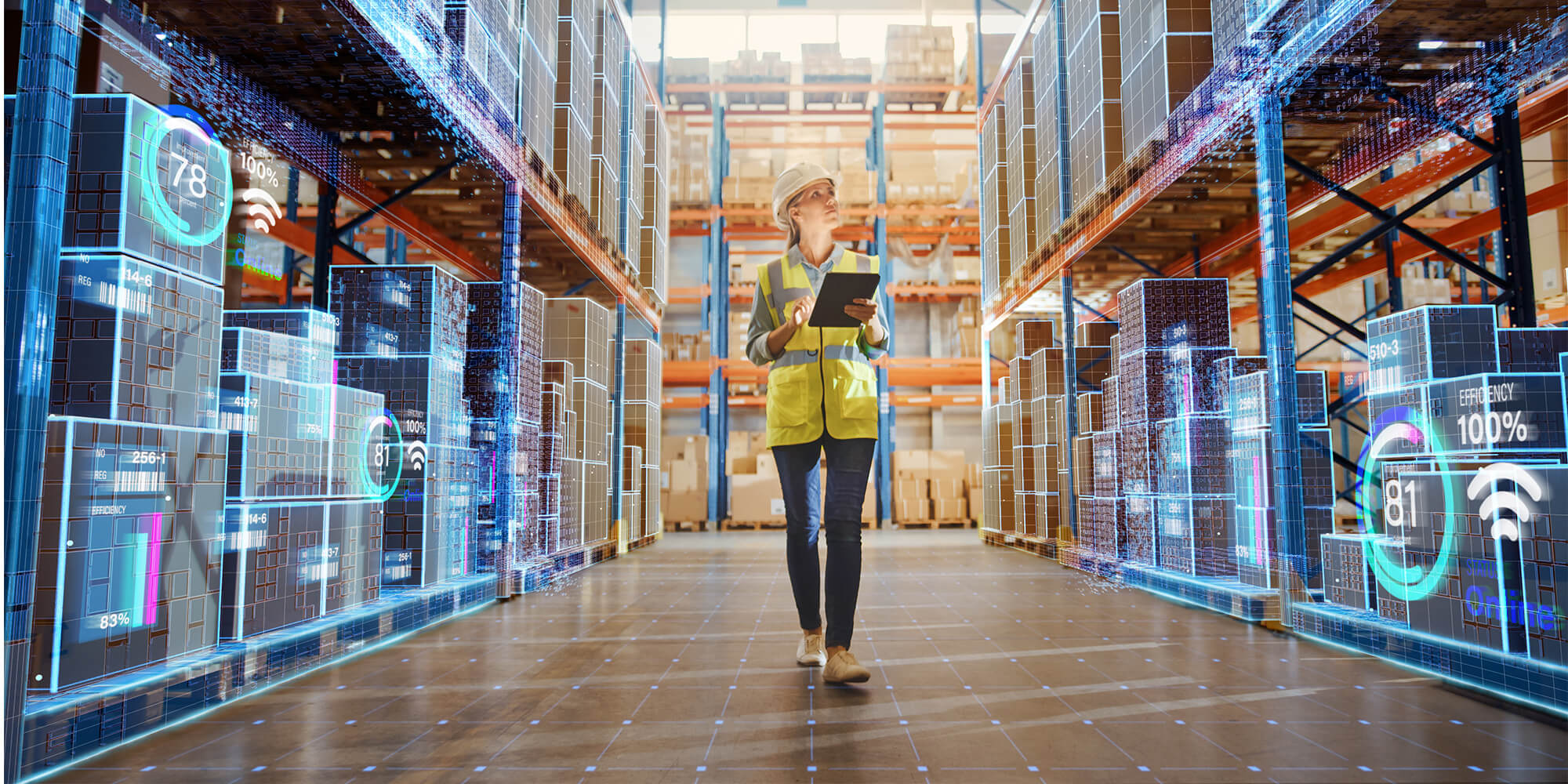
AI and Transport: Towards Smarter, Predictive and Sustainable Logistics
In the transport and logistics sector, every minute counts. Delays, rising energy costs, supply chain disruptions, and unplanned equipment maintenance all create significant challenges. Industry players must manage increasingly complex operations. In this context, artificial intelligence has become a strategic lever for improving efficiency, visibility, and profitability.
Today, AI is no longer an experimental technology. It is already transforming day-to-day operations in tangible ways.
Optimizing Flows and Routes in Real Time
One of the most widespread applications of AI is route optimization. By leveraging AI, companies can analyze thousands of data points in real time, including traffic conditions, weather forecasts, roadworks, traffic restrictions, and vehicle energy consumption.
The result is more efficient delivery routes, better-adjusted bus schedules, and a significant reduction in fuel costs and carbon emissions.
In logistics, these models also help identify bottlenecks within the supply chain, improving delivery lead times and service quality.
Anticipating Demand to Better Manage Inventory
Predictive AI helps businesses forecast demand fluctuations by analyzing historical, seasonal, and behavioral data.
A transport company can adjust its capacity according to activity peaks, while logistics operators can avoid stock shortages and overstock situations. This enhanced visibility improves warehouse management, reduces operating costs, and strengthens customer satisfaction.
Understanding usage patterns and customer needs more accurately has become a major competitive advantage.
Moving from Corrective to Predictive Maintenance
Unexpected breakdowns represent a considerable cost in the transport industry: vehicle downtime, delays, emergency interventions, and safety risks.
With predictive maintenance, AI continuously analyzes data collected from onboard sensors to detect weak signals before a failure occurs. Abnormal vibrations, overheating, or performance degradation can be automatically identified.
Operators can then intervene at the right moment, reducing downtime and extending equipment lifespan.
Embedded AI and Edge Computing Accelerate Decision-Making
In transportation, certain decisions must be made instantly. This is where embedded AI and edge computing come into play, enabling data processing directly at the equipment or vehicle level.
This approach reduces latency, enhances operational responsiveness, and limits the transfer of sensitive data to external infrastructures.
For companies in the sector, this means smoother and safer operations, as well as greater sovereignty over strategic data.
Turning Data into a Competitive Advantage
Today, the most successful companies no longer simply collect data. They use it to optimize operations, anticipate disruptions, and improve decision-making.
Artificial intelligence is paving the way for logistics that are more efficient, profitable, and sustainable.
At DEEP, we help transport and logistics organizations deploy sovereign AI solutions tailored to their business challenges. From infrastructure to large-scale operational deployment, we build end-to-end solutions that sustainably transform your operations through high-performance, secure, and fully controlled AI.