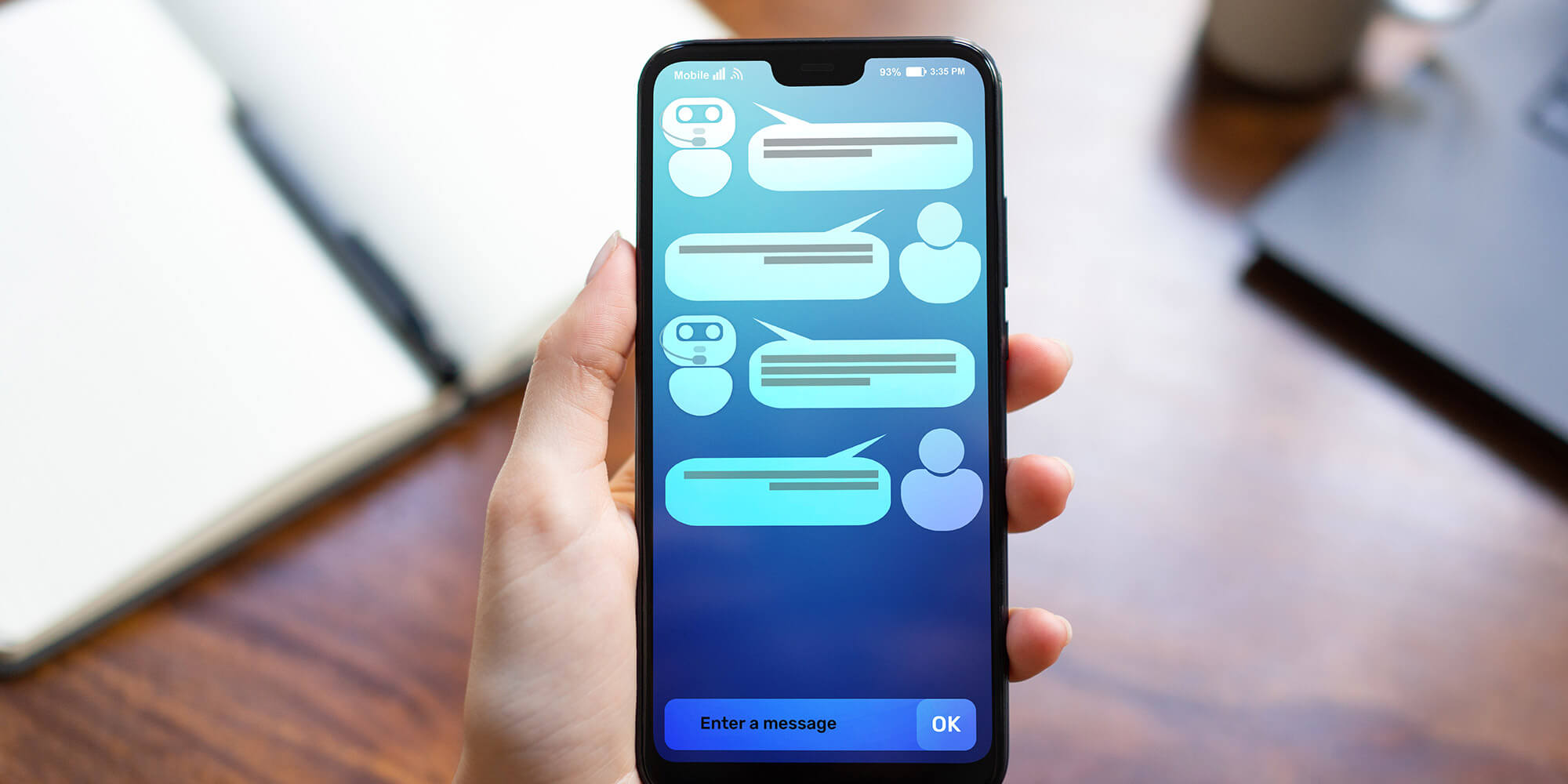
Two years on from Facebook Messenger letting chatbots into the app, what does artificial intelligence have to offer SMEs? Has the time come to embrace the hatbot revolution?
What exactly is a chatbot?
“Chatbot” is a contraction of the word’s “chat” and “robot”. It is an artificial intelligence (AI) feature that allows us to communicate using natural language in a Facebook Messenger, Slack or Skype chat for example.
Chatbots must not be confused with live chat systems hosted by certain websites. With chatbots, no employee is permanently logged on to answer client’s questions. Instead, pre-programmed AI is there to do that.
Chatbots also differ from virtual assistants like Alexa, Cortana or Siri. The latter are integrated in smartphones, computers and connected speakers and search for results on search engines, news sites and online retailers’ websites, etc.
Chatbots have a more targeted role. They operate in apps or messaging interfaces and help internet users to complete small tasks, such as making purchases online or solving technical issues. This chat interface gives clients relevant information in natural language without ever needing any human involvement. This is what makes them particularly useful for SMEs.
A new generation of FAQ
From sales to post-sales, through the optimisation of administrative management, chatbot technology appeals to SMEs. For Thimothée Meuret from Clustaar, a firm that offers a solution enabling customers to build their own chatbots, “SMEs are well placed to easily incorporate this technology because they are typically much more agile than large businesses”.
As they often face staffing pressures, SMEs tend to use chatbots to fill a client support need. According to Meuret, “customer services departments at SMEs often don’t have the means to satisfactorily meet the huge volumes of support requests from their clients”. Rather than enduring lengthy waits on hold with no hope of getting through to a sales representative, clients can now speak to an AI-powered chatbot to try to solve their problem or get clarification, all while easing the burden on support staff. This is because the most frequently asked questions account for nearly 80% of incoming calls. Teams can therefore focus on dealing with the remaining 20%, which are matters that require closer attention. This chat interface also makes trawling through FAQ pages to read sales conditions a thing of the past.
“The sound isn’t working…”
Whenever it held online training, the SME Webikeo’s instant messenger was instantly flooded with technical questions. To best serve its clients in finding solutions to their problems, the SME put in place a resolution protocol for the main sound and image issues. The instant messenger’s primary function was therefore clear: to interact with the trainer in real time on the training content.
A new accounting assistant
The accounting software provider, Sage, has also created a chatbot; its name is Pegg and it is primarily aimed at small companies. Using the chat interface, clients can pull up the amounts of invoices issued, expenses and even upcoming tax return deadlines, among others. Pegg makes accounting jargon accessible to all. By simply asking “Who owes me money?”, the chatbot will quickly extract the data from Sage and display the amounts owed for unpaid invoices, the names of the people concerned and the best way to contact them. To monitor expenses, Pegg even uses optical character recognition algorithms to analyse the receipts uploaded to the chat and automatically input them in Sage.
In that respect, chatbots appear to be particularly relevant in B2C interactions where the value of the product or service is not very high. When used wisely, they can play an invaluable part in maintaining client engagement.