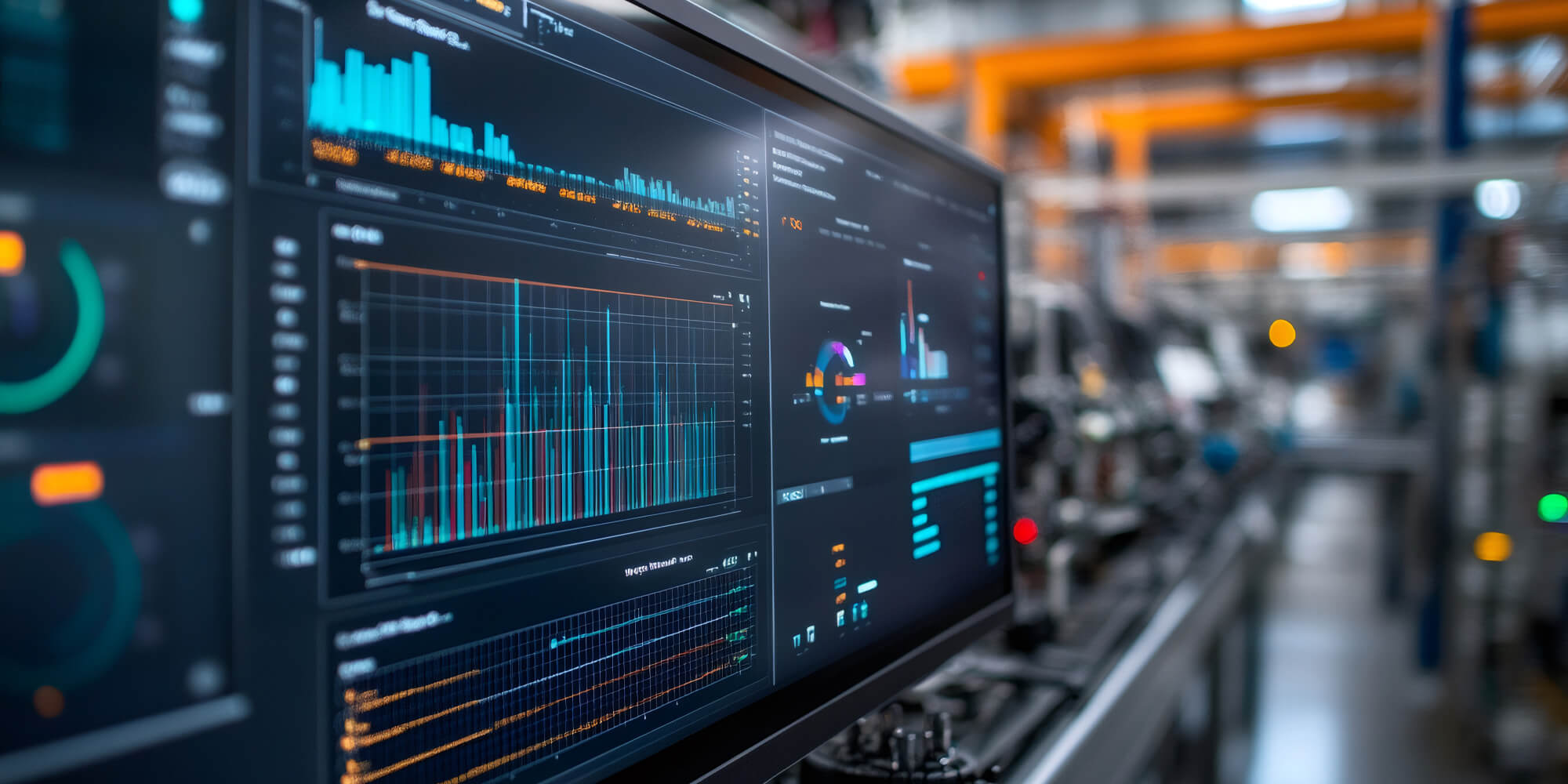
The Internet of Things is turning previously isolated objects into sources of information that help businesses understand situations, anticipate events and automate actions. A sensor can report a water leak, a machine can detect abnormal vibration and a vehicle can transmit its location or operating status. Individually, these measurements have limited value. Once collected, contextualised and analysed, they become powerful operational insights.
This transformation affects manufacturing, logistics, healthcare, buildings, public services, retail and many other industries. The objective is not to connect as many objects as possible. It is to collect and use the right data to address a clearly defined business need.
What is IoT, or the Internet of Things?
IoT stands for Internet of Things. It refers to a network of physical objects equipped with sensors, software and communication capabilities that allow them to collect and exchange data with other devices or digital systems.
Kevin Ashton popularised the term in 1999 while working on radio-frequency identification. Since then, IoT has expanded to include the measurement, monitoring, tracking and remote control of equipment.
An IoT system can therefore bring together:
-
physical objects, machines, vehicles or equipment;
-
sensors that measure temperature, pressure, location or consumption;
-
actuators that interact with the physical world;
-
networks that transport data;
-
platforms that manage devices and centralise information;
-
storage, processing and analytics capabilities;
-
applications used by business teams.
The value of an IoT project does not lie in the connected object alone. It comes from the entire chain that turns a raw measurement into information, a decision and, ultimately, an action.
The architecture behind this chain varies from one use case to another. Some objects communicate directly with a remote platform, while others depend on a local gateway. Some systems only report information, whereas others close the loop by controlling physical equipment. Understanding this complete flow is essential before selecting a device or network.
Connected object, IoT, M2M and IoE: what is the difference?
These terms are related, but they do not describe exactly the same thing.
A connected object is a physical device that can collect or exchange data, such as a meter, asset-tracking tag, air-quality sensor or industrial machine.
The Internet of Things is the wider ecosystem connecting these objects to networks, platforms, data, applications, security controls and business processes.
M2M, or Machine-to-Machine, refers to automated communication between pieces of equipment, often through cellular networks and SIM cards or eSIMs. It is a building block in many IoT projects.
The Internet of Everything, or IoE, extends the concept to people, processes, objects and data within one interconnected environment.
How does IoT work?
IoT operates as a continuous cycle: measure, transmit, process, interpret and act. Depending on the use case, that cycle may take a few milliseconds or run only several times a day.
1. Sensors and actuators interact with the physical world
Sensors are the starting point. They measure information from an object or its environment, including temperature, humidity, pressure, vibration, light, electricity consumption, fill level, speed or geographical position.
Actuators work in the opposite direction. They receive a digital instruction and act on a physical device: closing a valve, adjusting a thermostat, slowing a machine or activating an alarm. They allow an IoT system not only to observe, but also to intervene under human control or automatically.
2. Connectivity transports the data
The collected data must then reach a gateway, platform or information system. The right network depends on coverage, data volume and frequency, device mobility, energy consumption, latency, operating environment, availability requirements and total cost.
An autonomous tag reporting its position twice a day does not have the same requirements as a camera, moving vehicle or production line requiring near-instant communication. No single connectivity technology fits every IoT project.
Power availability is another decisive factor. A permanently powered machine can support frequent communication, while a remote battery-operated sensor may need to run for years with minimal maintenance. Device location, indoor penetration, roaming requirements and possible network outages must also form part of the connectivity assessment.
3. Gateways and IoT platforms manage the devices
An IoT gateway can aggregate data from several sensors, translate protocols and secure transmission. It is useful when objects cannot communicate directly with a remote platform or when data requires an initial local processing step.
The IoT platform centralises device-fleet management, including registration, health and connectivity monitoring, alerts and remote updates. Lifecycle management becomes essential when an organisation operates hundreds or thousands of devices across multiple locations.
At scale, teams need a reliable inventory of deployed devices, firmware versions, connectivity status and security credentials. Automated provisioning and over-the-air updates reduce manual work and help maintain a consistent level of security throughout the fleet's operational life.
4. Cloud and edge computing process the data
Data can be sent to cloud infrastructure or a datacenter for storage, correlation and analysis. It can also be processed close to the equipment using edge computing.
Edge processing reduces the amount of data transmitted and enables faster responses. An industrial machine can, for example, detect a critical anomaly locally and shut down without waiting for a remote system. The cloud remains valuable for centralising historical data, identifying trends, training artificial intelligence models and supervising large fleets. Many projects combine both approaches.
This hybrid architecture also supports resilience. If connectivity is temporarily unavailable, the edge layer can continue selected operations and synchronise data when the connection returns. The precise distribution of processing between device, gateway and cloud depends on latency, security, cost and business-continuity requirements.
5. Applications turn data into decisions
Raw data only becomes useful once it has context. Knowing that a door is open is a measurement. Knowing that it has remained open at an unusual time when no authorised person is present is actionable information.
IoT applications present information through dashboards, alerts, reports, recommendations or automated actions. APIs can also send data to an ERP, maintenance-management system, Data platform or other business application. Artificial intelligence takes this further by detecting unusual behaviour, predicting failures and optimising processes in real time.
These capabilities depend on trustworthy data. Measurements must be accurate, time-stamped, contextualised and linked to the right device or asset. Without appropriate data-quality rules and governance, even a technically successful deployment may produce misleading dashboards or unreliable automated decisions.
Which technologies connect IoT devices?
Connectivity choices directly affect battery life, coverage, reliability and cost. The main technologies fall into several families.
| Technology |
Main strengths |
Typical use cases |
| NB-IoT |
Low power consumption, strong indoor penetration, suited to small data volumes |
Smart meters, fixed sensors, consumption monitoring |
| LTE-M |
Mobility, controlled power use, more frequent communication |
Logistics, alarms, telematics, mobile equipment |
| 4G and 5G |
Throughput, mobility, coverage and low latency depending on the network |
Vehicles, video, industry, critical equipment |
| LoRaWAN |
Long range, low power, public or private networks |
Agriculture, buildings, smart cities, industry |
| Sigfox 0G |
Short messages, long battery life, large low-power deployments |
Asset tracking, alerts, logistics, metering |
| Wi-Fi |
High throughput and integration with local networks |
Buildings, powered equipment, multimedia devices |
| Bluetooth Low Energy |
Low power and flexible short-range connectivity |
Tags, healthcare, indoor sensors, presence monitoring |
| RFID and NFC |
Fast identification, with or without a battery depending on the technology |
Inventory, access control, traceability, payments |
For professional deployments, NB-IoT and LTE-M address requirements for low power consumption and wide coverage. 4G and 5G are suited to applications requiring more bandwidth, mobility or responsiveness. M2M SIM cards, eSIMs and multi-operator solutions also make international roll-outs easier.
LPWAN technologies prioritise range and battery life over throughput. LoRaWAN can run as a private network or use an operator-managed service. Sigfox 0G uses a public network designed for large numbers of devices that transmit small amounts of data.
Bluetooth Low Energy is well suited to efficient sensors and local interactions. Its actual range depends on transmission power, antenna design and the surrounding environment, so it is not necessarily limited to only a few metres. RFID and NFC are effective ways to identify objects, track inventory or control access.
The final choice may combine several technologies. A sensor can communicate with a gateway over Bluetooth or LoRaWAN, while the gateway uses fibre, Wi-Fi or a cellular network to reach the platform. The architecture should always follow the business use case rather than a preference for one particular protocol.
Why is IoT strategic for businesses?
IoT provides access to field data that was previously unavailable, collected only occasionally or recorded manually. This visibility supports more efficient operations and better-informed decisions.
To demonstrate value, businesses should link IoT data to measurable indicators such as equipment availability, intervention time, energy consumption, asset utilisation or service quality. This makes it possible to compare the benefits with the full cost of devices, connectivity, integration and ongoing operations.
Improving operational efficiency
Monitoring equipment and workflows helps detect anomalies, reduce manual tasks and automate operations. Teams can intervene at the right place and time.
Anticipating failures and optimising maintenance
In predictive maintenance, sensors measure a machine's vibration, temperature or energy consumption. Analytics identify deviations before a failure, helping teams prepare the right intervention and reduce unplanned downtime.
Reducing resource consumption
Connected sensors and meters monitor water, electricity or heating consumption and flag leaks, excessive usage or poor settings. IoT helps control costs while supporting environmental objectives.
Developing new services
Device data can enhance existing offers or create new services such as usage-based billing, delivery tracking, proactive maintenance and real-time information. Manufacturers can therefore build an ongoing service relationship rather than rely on a one-off sale.
What are the main enterprise IoT examples?
Manufacturing and predictive maintenance
In manufacturing, IoT monitors production lines, machinery and operating conditions. Data helps anticipate failures, improve quality and optimise resource use. Edge computing can also trigger a local action when a critical situation occurs.
Transport, logistics and asset tracking
Connected tags help locate vehicles, goods, containers and equipment. Businesses can track assets, optimise routes and monitor transport conditions. Multi-operator connectivity is particularly valuable when assets move between countries.
Smart buildings and energy management
In buildings, sensors measure air quality, temperature, occupancy and consumption. These insights help adjust heating, ventilation, lighting and maintenance according to actual usage.
Smart cities and public services
Public authorities use IoT to monitor water networks, optimise waste collection, manage street lighting and analyse air quality. A connected meter can simplify remote readings and accelerate leak detection.
Healthcare, retail and services
In healthcare, connected devices can monitor selected parameters and securely transmit information to authorised professionals. In retail, RFID supports faster inventory and stronger product traceability. Service providers use IoT to monitor remote sites, manage equipment and understand how spaces are used.
What are the main IoT challenges?
The success of an IoT project does not depend solely on sensor performance. It requires control of the entire system throughout its lifecycle.
Securing devices, communications and access
Every connected object is a potential access point to the information system. Security must be built in from the start through unique device identities, authentication, encryption, network segmentation, access control, monitoring and secure updates.
Protection must cover the complete chain from sensor to application. A compromised or unavailable object can disrupt a building, physical operation or industrial process.
Governing the collected data
Before deployment, organisations must define which data they actually need, where it will be stored, how long it will be retained and who may access it. Quality, privacy, sovereignty and integration with business systems must all be addressed early.
An effective strategy prioritises data that supports decisions. It avoids unnecessary data flows, storage costs and environmental impact when no clear business benefit exists.
Ensuring interoperability and long-term viability
IoT projects often bring together several suppliers. Standards, APIs and open architectures reduce dependencies and simplify integration. Organisations must also anticipate network evolution, battery replacement, software updates and device end of life.
Moving from pilot to large-scale deployment
A prototype using ten sensors does not guarantee easy operation with several thousand devices. Supervision, provisioning, support, coverage, recurring costs and maintenance must be assessed from the outset. Total cost includes devices, connectivity, platform, integration, security, storage, operations and renewal.
Scaling also changes organisational responsibilities. IT, operational technology, security, Data teams and business owners need clear roles for incident management, device replacement, access approval and data ownership. Without this operating model, technical issues may remain unresolved even when the platform itself performs correctly.
How can a business make an IoT project successful?
An IoT project should begin with a business requirement rather than a technology. The first step is to define the problem, users and indicators that will measure the result. The organisation can then select the useful data, architecture, devices and connectivity.
A pilot helps verify coverage, data reliability, integration and value under real operating conditions. It should, however, include a clear path to scale. Security, data governance, supervision and the business model cannot be postponed until after the experiment.
For a detailed methodology, read the 2026 guide to preparing your IoT project.
How DEEP supports IoT projects
An IoT project brings together business use cases, devices, connectivity, cloud or edge architecture, data, cybersecurity, integration and operations. The consistency of these components determines the reliability and scalability of the solution.
DEEP supports organisations across this entire value chain. Its Telecom, Data & AI, Cloud and Cybersecurity expertise connects equipment, secures communication and transforms collected data into actionable information.
DEEP's IoT solutions cover asset geolocation, fleet management, air-quality monitoring, connected water meters, waste management and remote-site monitoring. For national and international roll-outs, M2M and IoT connectivity solutions connect and supervise equipment through SIM cards, eSIMs and multi-operator options.
The objective is not simply to connect objects, but to build a secure ecosystem that delivers sustainable business value.
Sources :